Enterprise Cloud Strategy: Hybrid, Multi-Cloud & Distributed Cloud
Explore hybrid, multi-cloud, and distributed cloud models to build a secure, scalable enterprise cloud strategy. Discover which approach fits your business goals.
Published on 08 Jan 2026
Hybrid vs Multi-Cloud vs Distributed Cloud: A Practical Guide for Enterprise Leaders
One of the most crucial choices that businesses have to make in the fast-changing digital environment nowadays is whether to adopt a hybrid cloud, a Multi-Cloud strategy or Distributed Cloud when managing their IT infrastructure. They have advantages of their own, which influence flexibility, growth, security, and innovation. This blog guides you to select the most suitable one for your Enterprise Cloud Strategy.
Conceptualizing Hybrid Cloud Architecture
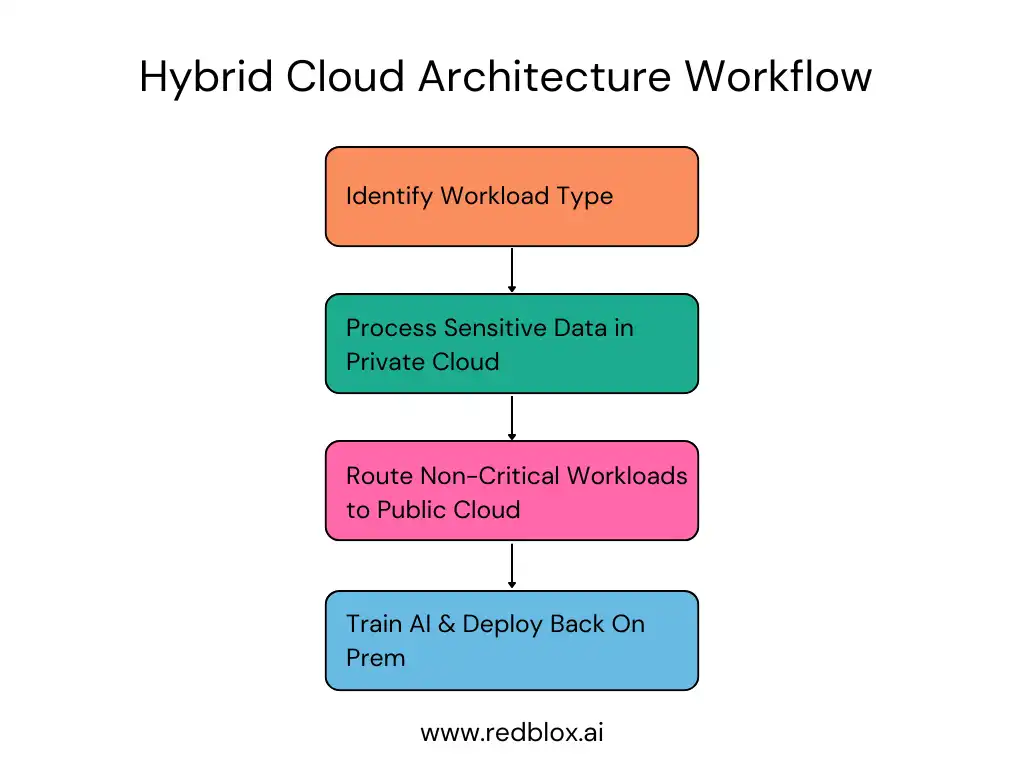
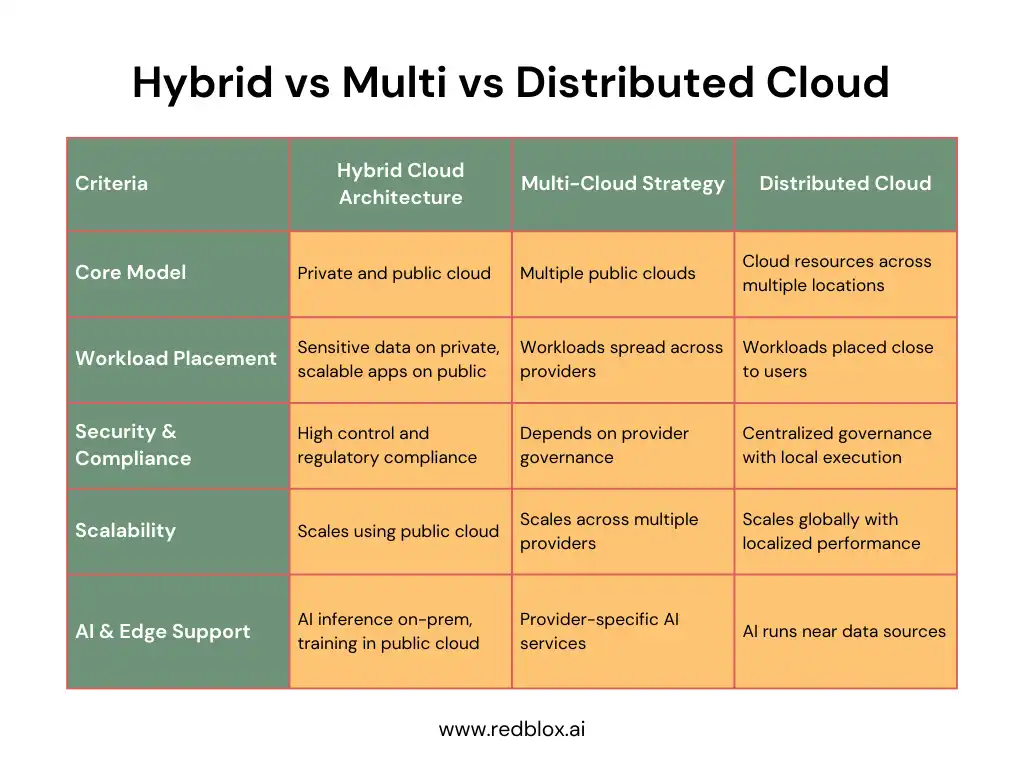
The Hybrid cloud architecture is integrated with both private and public cloud, which enables businesses to store sensitive information within their own server. Public clouds are used to handle non-sensitive tasks or during peak traffic.
Why enterprises use it:
- Provides the security to sensitive data.
- Provides scalability in case of high demand.
- Streamlines expenses by balancing private and public resources.
Key Benefits of Hybrid Cloud
- Flexibility: It allows businesses to determine where to conduct their operations depending on the cost, performance or rules that they have to comply with. Example, would be a bank retaining sensitive financial data in a private cloud and relocating not-so-sensitive services such as customer interaction platforms to the public cloud.
- Scalability: Public cloud resources are easily scalable to accommodate high demand periods without necessarily developing additional private infrastructure.
- Security and Compliance: Sensitive or regulated data can remain in private servers or even in private clouds, which aids in the obligations of the law, such as GDPR, HIPAA, or PCI-DSS.
- Cost Optimization: Public cloud services are only paid when they are used, and it prevents having superfluous costs on unused infrastructure.
Characteristics of Hybrid Cloud Architecture
- Workload Flexibility: Firms can shift workloads between the private and the public clouds.
- Scalability: Operations can easily increase with the use of public cloud resources during high periods.
- Improved Security: Sensitive data may be stored in a secure place in the private servers and still enjoy the benefits of cloud services.
- Cost-Effective Operations: On-Demand use of the public cloud will reduce the overall IT costs. Cloud and Edge computing support: The business will have the opportunity to execute AI models on-premises and use the public clouds to perform training or analyze large amounts of data.
What is a Multi-Cloud Strategy?
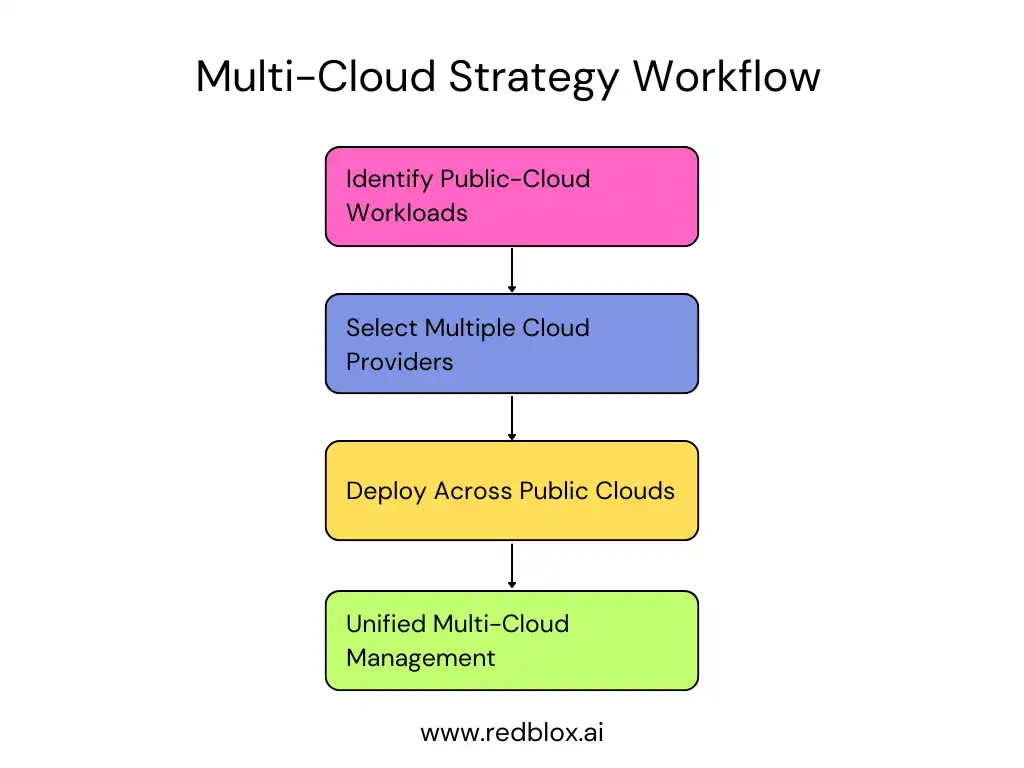
The Multi-Cloud Strategy involves several public clouds and no private infrastructure. It also eliminates lock-in with vendors and spreads the workloads among providers in order to achieve better performance, cost-effectiveness, and flexibility.
Benefits of Multi-Cloud Strategy
- Resilience: Separating the work of various providers, companies minimize risks of failure of one vendor or its outage.
- Optimization: Organizations are able to select optimal services offered by each cloud provider, such as using AWS to do computations, Azure to do analytics, or Google Cloud to do AI/ML tasks.
- Innovation and Speed: The availability of many tools and services can be used to develop and test the app faster.
- International Connectivity: Multi-Cloud services allow businesses to effectively roll out services in various locations, which improves their performance and the user experience.
Characteristics of Multi-Cloud Strategy
- Redundancy and Reliability: This method decreases the dependency on one cloud provider, thus raising the uptime.
- Service Specialization: Firms are able to select an optimal provider of certain jobs, such as machine learning, storage management, or database management.
- Global Scalability: Work with customers worldwide by having provider networks in different sites.
- Innovation Enablement: Fill out various tools and sites and lack attachment to a system.
The Function of Cloud and Edge computing
Edge computing supports hybrid, Multi- Cloud and Distributed Cloud approaches by computing at the edge, minimizing latency and increasing the performance of applications.
Edge Computing Advantages for Businesses.
- Ability to Process Data Faster: Data can be processed at the local level, and then the summarized results are sent to the cloud.
- Less Latency: This improves the responsiveness of applications that require real-time responses, such as self-driving vehicles or the Internet of Things.
- Increased Security: Sensitive data can be managed domestically, and this minimizes chances of leakage.
- Operation Efficiency: It reduces the network traffic by reducing unnecessary data transfers. Hybrid cloud solutions are effective with Cloud and edge computing, which integrates the safety of personal clouds with immediate procedures locally.
Distributed Cloud Architecture: A New Paradigm
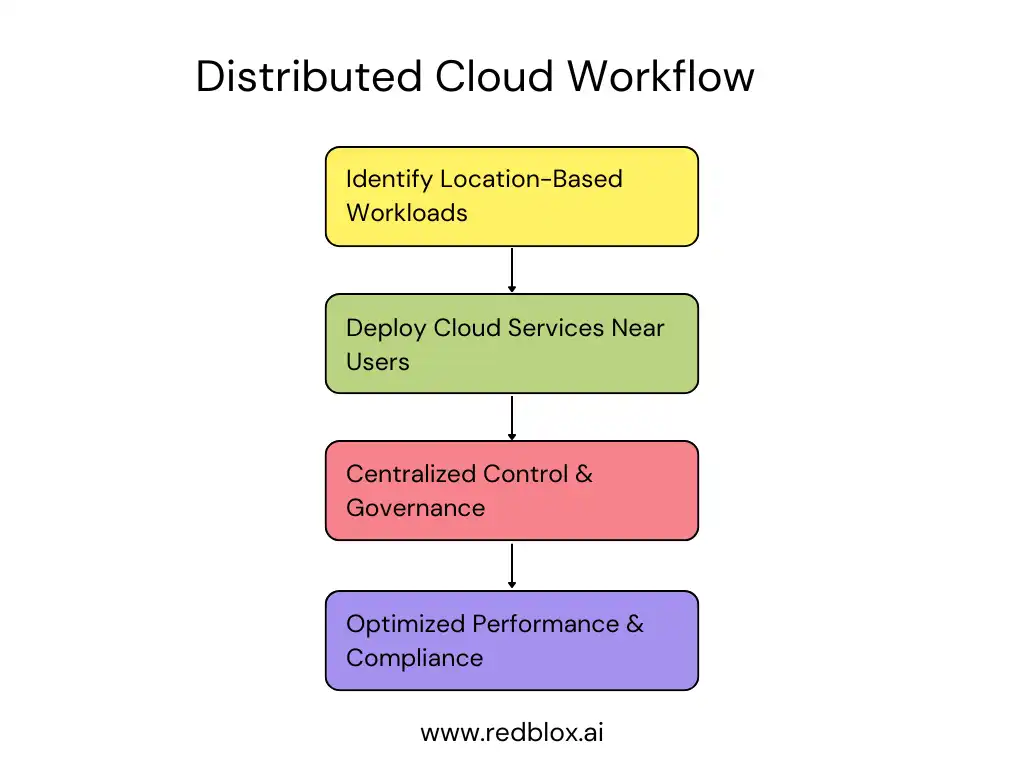
Distributed Cloud is a development of the hybrid and Multi-Cloud. Where cloud resources are deployed in more locations and operations are controlled by a central team. This strategy improves efficiency, scalability and control among businesses.
Benefits of Distributed Cloud
- Global Performance: With proximity of workloads to users, latency reduces and efficiency increases.
- Resilience: An issue at one spot does not put a halt to everything.
- Streamlined Management: Centralized control ensures compliance and security regulations are adhered to all over.
- AI Optimization: AI models can be executed on the same data that it feeds, reducing the time required to train and make predictions. As an example, a streaming platform may deploy servers in new locations in order to serve the local audience whilst maintaining a centralized group that oversees content delivery, scale, and security.
Characteristics of Distributed Cloud Architecture
- Global Performance: Workloads that are close to users result in minimal latency and enhance efficiency.
- Resilience: Failure in a single site does not affect the whole system, thus high availability.
- Streamlined Management: Centralization will ensure uniform security, governing and compliance in all the places.
- AI Optimization: AI models can execute close to the data they depend on reducing training time and accelerating inference in real time.
Business Decision making Framework
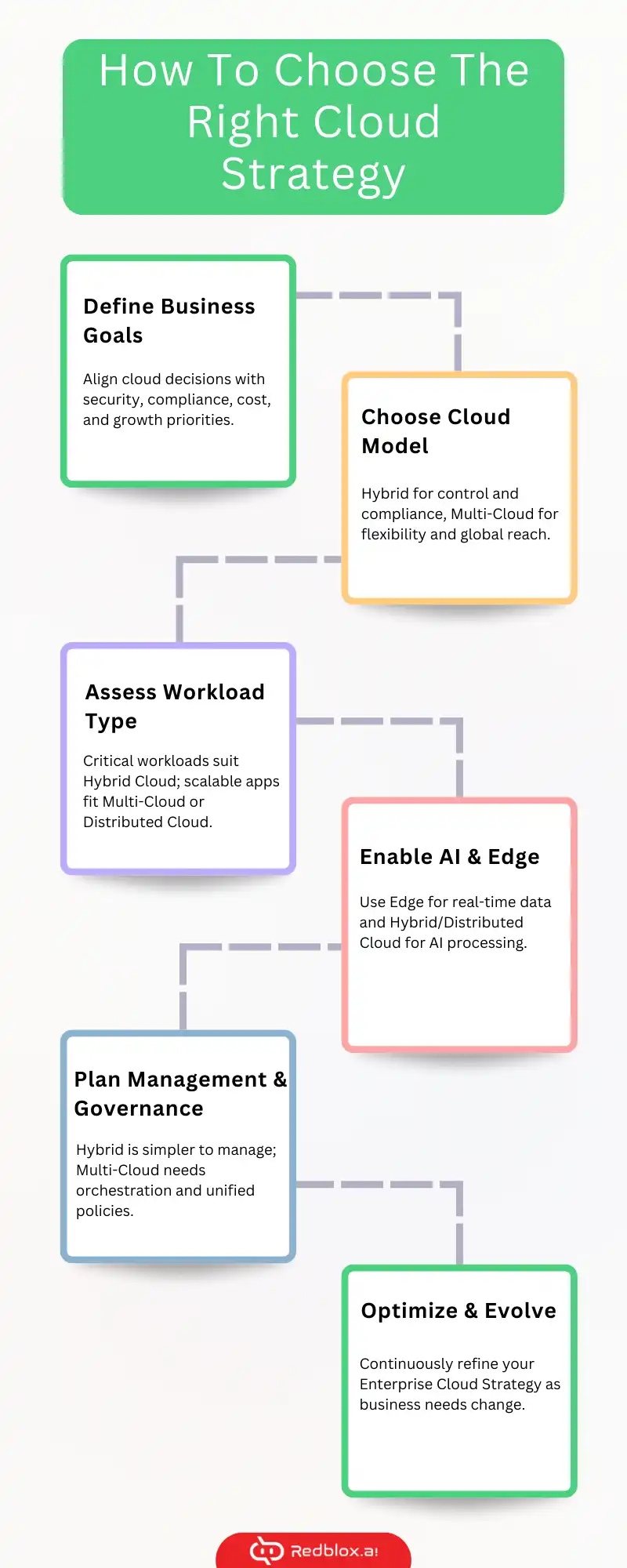
The choice of cloud strategy is important in terms of flexibility, security and innovativeness. When looking at Enterprise Cloud Strategy, companies should consider hybrid clouds, Multi-Clouds, clouds at the edge, and Distributed Clouds. Here’s a quick guide:
1. Business Goals
The initial step is to know the goals of your organization and align it with the Enterprise Cloud Strategy.
- Hybrid Cloud Architecture Most suitable where businesses are aiming to reduce expenses, comply with the rules and regulations, and ensure sensitive information is secured. The private clouds secure all key workloads; the public clouds offer scalability to other applications.
- Multi‑Cloud Strategy Best suited to companies that require stability, worldwide access and specialty cloud services. The multiple-providers approach will ensure that you are not tied to a single supplier and accelerates innovation.
As Example, a bank, to meet compliance, could store client information in its own private cloud but operate customer-engagement applications on public clouds.
2. Workload Type
Various assignments require various methods:
- Hybrid Cloud Architecture - Ideal in crucial or controlled activities, such as medical records or money transfers.
- Multi-Cloud Strategy - Ideal in case of high-growth or global applications, like online shopping or SaaS applications, in which high availability and performance are of importance.
Note: By centrally controlling the resources and distributing them in proximity to the end-users, Distributed Cloud can be used to enhance the performance of workload delivery.
3. AI and Edge Computing Needs
AI and edge computing would be essential in business cases that require real-time data processing:
- Hybrid/Distributed Cloud Architecture - Sensitive AI models are run in private clouds, and large-scale computing is done by public clouds. Edge devices minimize time and increase efficiency.
- Multi-Cloud Strategy - Not only does it spread load balancing, but it also requires close coordination with the providers to maintain performance, integration, and consistency.
As an example, IoT sensor data may be processed locally on the edge by a manufacturer and trained in a hybrid or Distributed Cloud.
4. Management and Resources
The load of management changes with strategy:
- Hybrid Cloud Architecture - Less complicated when organizations already possess private infrastructure. Security, compliance and cost tracking are easier.
- Multi-Cloud Strategy - It is advanced orchestration, monitoring, and governance tools that are needed to address multiple providers and maintain uniform policies.
Note: Before going to Multi-Cloud, enterprises should evaluate internal capabilities and technical skills.
Real‑World Examples
- Hybrid Cloud A healthcare provider stores the data of patients in a private cloud but resorts to the public cloud to diagnose the patient through AI and provide telehealth services.
- Multi-Cloud - A multinational retailer operates its online shopping environment with the help of AWS, Azure, and Google Cloud in order to make the most of uptime, service mix and analytics.
- Distributed Cloud - A streaming service will deploy delivery servers around users all over the globe but centrally operate security, scale, and AI suggestions.
- Hybrid and Edge - Data processing sensor data at the edge devices is performed by a manufacturer, whereas sensitive operational data is stored on a personal cloud, enhancing real-time decision-making.
These illustrations demonstrate that companies can customize cloud plans to meet distinct security, operational and performance requirements.
Enterprise Cloud Strategy Best Practice
The following practices help strengthen your Enterprise Cloud Strategy
1.Performance
- Evaluate Workloads - Determine which apps are to be placed in the private, public, or Multi-Cloud environments.
- Leverage Edge Computing - Reduce Latency of real-time and IoT applications.
- Implement Distributed Cloud - Deploy workloads around the planet and achieve performance, redundancy, and efficiency.
- Embracing Automation - Managing Multi-Cloud using orchestration.
2. Security
- Push towards Security - Implement identical security policies on all clouds.
3. Cost
- Monitor Costs - Keep an eye on how they are used.
4. AI readiness
- Design AI - Make sure the infrastructure can bear distributed AI loads.
5. Governance
- Ongoing Review - Periodically re-evaluate the strategy in order to keep up with business and technical evolutions.
Future Trends
- Hybrid Cloud Dominance Focus on security, compliance and control of sensitive data.
- Multi‑Cloud Expansion Have many suppliers to be more resilient, innovative, and special tools.
- Edge Computing Growth Real time process data to address healthcare, retail and logistics faster.
- Distributed Cloud Integration World wide deployment with centralized management enhances efficiency.
- AI at the Edge and Cloud Move AI close to data sources to execute the operations in a more efficient manner in a short period of time.
Conclusion
Hybrid Cloud is secure, Multi-Cloud is resilient, and Distributed Cloud with Edge is fast and AI. The ability to innovate, optimize, and remain competitive allows companies to combine these approaches for their Enterprise Cloud Strategy in order to stay competitive.
FAQ
1. What is Hybrid cloud architecture, and why are companies adapting to it?
Hybrid Cloud is a mixture of both the private and public cloud to provide secure and scalable operations.
2. How does a Multi-Cloud strategy benefit organizations?
Multi- Cloud relies on a number of providers to minimize lock-in and increase reliability.
3. Is hybrid cloud more secure than Multi-Cloud?
Hybrid Cloud ensures the safety of sensitive data through the use of its own infrastructure, but Multi-Cloud assumes the necessity to regulate all providers uniformly.
4. What are the cost differences between hybrid cloud and Multi-Cloud?
Hybrid Cloud has a compromise between the costs of the private and the public resources, and Multi-Cloud has an optimization on the spending of various providers.
5. Can enterprises combine hybrid cloud and Multi-Cloud approaches?
Yes, sensitive loads are kept on private infrastructure. The less sensitivity is spread over the clouds to become more flexible.
6. Challenges of managing a Multi-Cloud environment?
Multi-Cloud systems are intricate, and it requires structural security and careful oversight.