Fine-tuning vs RAG vs Agents Comparison | AI Stack 2026
Explore the Fine-tuning vs RAG vs Agents comparison and learn how to build the right AI stack in 2026 for scalable, efficient, and adaptive AI systems.
Published on 30 Dec 2025

How to Choose the Best AI Stack in 2026: Fine-tuning vs RAG vs Agents
The 2026 AI stack architecture is developing at a faster rate. As AI-driven business transformation grows, Large Language Models (LLMs), Retrieval-Augmented Generation (RAG), and agentic AI become the difference between competitive advantage and failure. This blog compares Fine-tuning vs RAG vs agents and provides clear instructions.
Why Selecting the Right AI Stack Matters in 2026
What is an AI stack in 2026?
It is a combination of models, data infrastructure, tools and practices that gives scalable, reliable, and production-ready AI systems.
With the AI Stack concept, the goal is to create an ecosystem that helps you achieve your goals. An AI stack will make it possible:
- Intelligent automation of decision-making.
- Faster go-to-market.
- Cut down on operational expenses.
- Lower costs per query and reduced human errors.
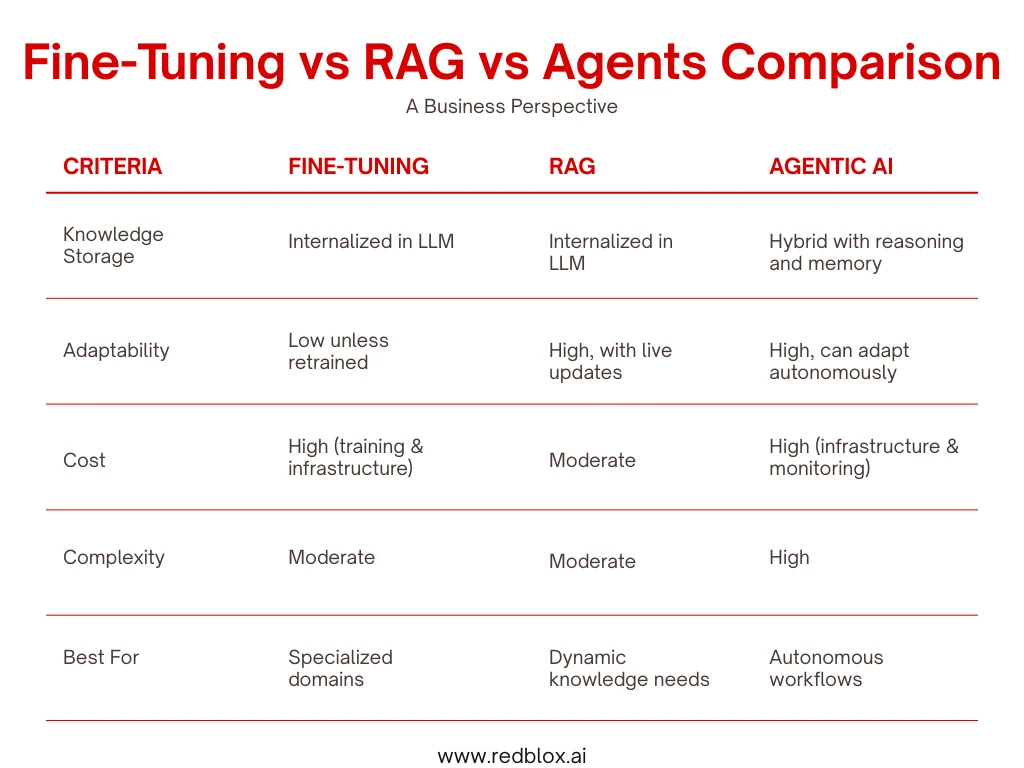
To use AI systems effectively in 2026, start by assessing your needs. Consider the type of work your AI will perform. Here, the systematic comparison of Fine-tuning vs RAG vs agents is necessary.
Fine-tuning: Customizing LLMs to Be Precise
What is LLM Fine-tuning?
LLM Fine-tuning is trained on a domain-specific dataset. It allows the model to produce specialized outputs for your business.
Key Benefits of Fine-tuning
- Domain Expertise: The fine-tuned models are strong in the field of information.
- Stable Response: They are reliable and predictable.
- Behavior Control: Can control model outputs to match the tone and style of your company.
Nonetheless, the use of LLM Fine-tuning strategies is to be planned. It is important to ensure data quality and avoid overfitting issues.
When to Choose Fine-tuning
Fine-tuning is preferred in case:
- The field demands very precise and situational results.
- The model should have proprietary datasets embedded in it.
- You need uniform behavior in all outputs of AI.
Fine-tuning works best for domain-specific tasks.
RAG System Architectures: Knowledge on Demand
Understanding RAG
RAG combines LLMs with external information retrieval.
RAG does not rely on internal knowledge; instead, it retrieves relevant data from external sources like databases or knowledge bases in real-time.
Advantages of RAG Systems
- Real-time Knowledge: RAG can also answer correctly when the data are changed.
- Smaller Model Footprint: The model is not required to store all information because it can be retrieved externally when needed.
- Economical: Low training costs compared to extensive Fine-tuning.
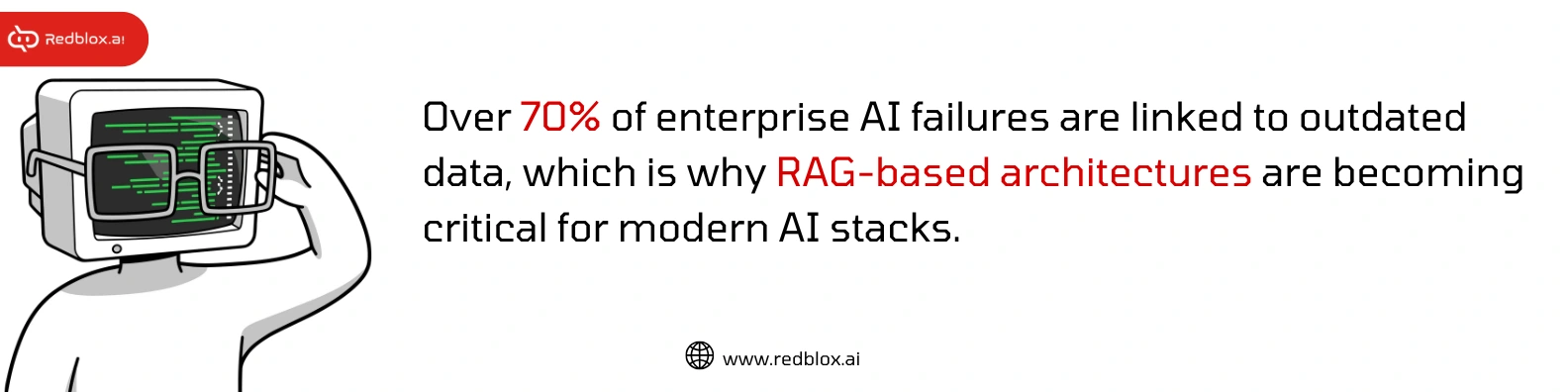
In the RAG system architectures, businesses should focus on data retrieval techniques and controlled data streams.
Ideal Use Cases for RAG
RAG is the best to use in cases like this:
- The information environment, such as news, finance, and research, is usually updated regularly.
- Customer support that needs fast and accurate response.
- Cases in which knowledge is too large or complex to be fully represented in a model.
The comparison between Fine-tuning vs RAG vs Agents shows that RAG is a low-cost option for dynamic data-driven companies.
Agentic AI Development: Autonomous Intelligence
What are agentic AI systems?
By 2026, Agentic AI will go from an experiment to a controlled production system.
Agentic AI systems are designed to reason, plan, and act without human intervention. These AI agents integrate numerous AI models, access external data, and perform complex tasks effectively.
Risk, governance, and trust are the key issues in agentic AI. Using safety measures and oversight is necessary to overcome these.
Advantages of Agentic AI
- Autonomous Decision-Making: Agents will operate without the need to involve a human.
- Multi-Step Reasoning: They are able to do work that involves planning and foresight.
Agentic AIs can coordinate multiple tools and APIs in complex workflows.
When to Implement Agentic AI
The development of agentic AI is appropriate in instances where:
- Multi-step decision-making is necessary in business processes.
- Activities include working with numerous tools and data.
- Companies seek the freedom to operate their activities.
In the comparison of Fine-tuning vs RAG vs Agents, Agentic AI is the most advanced, but requires strong infrastructure, monitoring, and regulation.
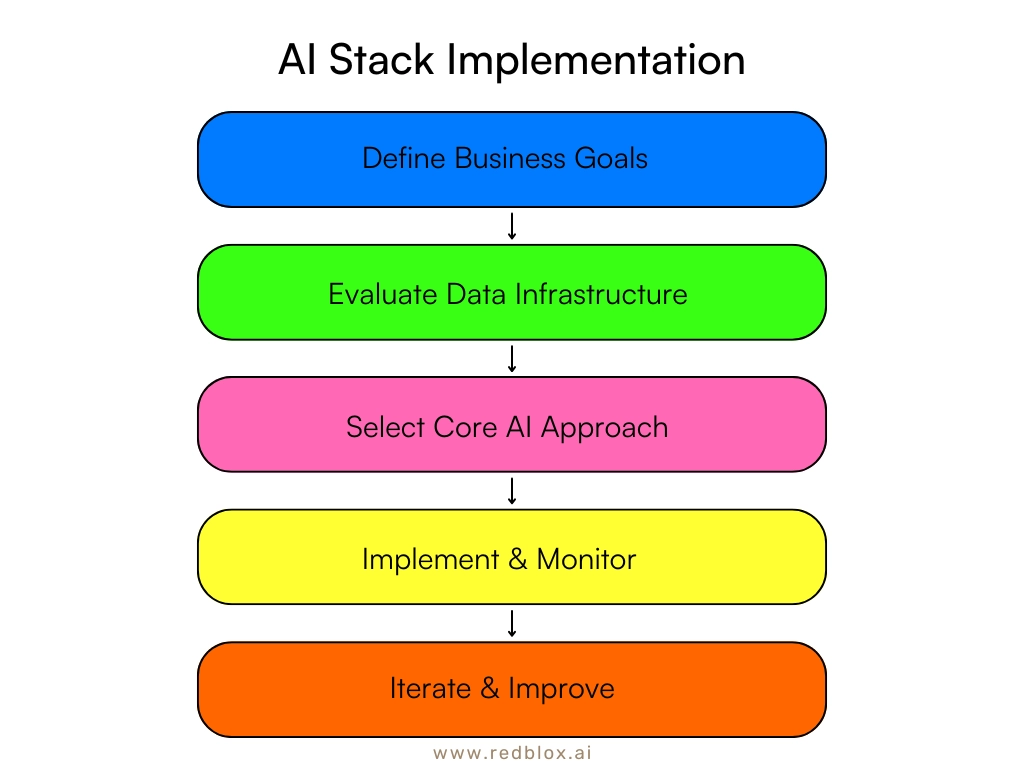
The Roadmap: Construction of an AI stack in 2026.
Step 1: Define Business Goals
Firstly, it is necessary to explain the purpose of the AI:
- What are the problems it must address?
- Is domain knowledge a key consideration?
Your comparison of Fine-tuning vs RAG vs agents is based on these answers.
Step 2: Evaluate Data Infrastructure
Data is the foundation of an AI system. Consider:
- Internal dataset quality and structure.
- Skill to index external knowledge and retrieve it efficiently.
- Compliance with the privacy rules.
Fine-tuning requires high-quality datasets, whereas RAG depends on efficient data pipelines and retrieval methods.
Step 3: Select Core AI Approach
- Fine-tuning: Applicable in situations where precision is essential.
- RAG: RAG is used when the information is large.
- Agentic AI: Agents are applied when algorithmic thinking is required.
Step 4: Implement, integrate, and monitor
Deploy AI using monitoring tools to measure:
- Output accuracy.
- Response time and latency in the system.
- Operational cost per query.
- Risk compliance.
The agentic AI development requires close monitoring because decisions can be risky.
Step 5: Iterate and Improve
Permanent advancement is a must.
- Based on the domain, LLM Fine-tuning strategies can be updated.
- RAG knowledge sources should be enhanced.
- Optimize agent-based decision-making.
Such a cyclical way of doing things will ensure that your AI stack in 2026 is still useful and alive.
Best LLM Fine-tuning for Maximum Impact
Fine-tuning as an approach is still powerful when performed in the right manner.
- Domain-Specific Data Collection - Collect domain-specific and clean datasets of real-world applications.
- Parameter-efficient Fine-tuning - Use LoRA and PEFT to reduce resource consumption.
- Continuous Feedback - The system uses feedback loops to improve the model over time.
- Periodical Benchmarking - Align fine-tuned models, RAG, and agentic AI systems with the business objectives.
The use of LLMs can assist organizations in optimizing ROI.
RAG Systems Architectures: Implementation Best Practices
The design of good RAG systems architectures comprises
- Best Optimal Strategy: Data volume decides whether to use vector search, hybrid retrieval or semantic indexing.
- Scalability of Pipelines: Make sure the systems can handle heavy queries without delays.
- Connecting with the Existing Workflows: API connectivity enables real-time retrieval and model responses.
- Data Governance: This helps observe security and compliance when using various sources.
Companies that mastered RAG architectures can effectively balance performance, cost, and knowledge accessibility.
The Development of Agentic AI
To succeed in the development of agentic AI, it is necessary:
- Memory Management: Keep track of past information along with current information to make correct decisions.
- Task Planning Algorithms: AI agents plan multi-step operations in sequence.
- Risk and Safety Controls: Apply fail-safes to autonomous decisions.
- Combination with Tools: The agents organize AI services and APIs.
Unlike conventional AI, Agentic AI reduces human intervention and handles complex workflows.
Hybrid AI Stacks: Fine-tuning, RAG, and Agents
It is expected that in 2026, most companies will be using hybrid AI stacks.
- An LLM Fine-tuning provides knowledge in the domain.
- RAG systems guarantee access to knowledge bases that are not dynamic.
- The agentic AI automates decision-making and workflow coordination.
In this way, businesses can take advantage of AI systems without restrictions.
Real-World Applications
Financial Sector
- In analysis and legal compliance, fine-tuned models are used.
- The market insights use RAG systems.
- Customer engagement automation using AI agents.
Healthcare
- Medical record interpretation using fine-tuned models.
- RAG: for the recent research retrieval.
- AI agents plan treatments and control resources.
Retail
- RAG is used in real-time product recommendations.
- Customized LLMs provide customer support.
- Agentic AI is also used in logistics and inventory management.
Future Building: AI Stack in 2026 and Beyond
By 2026, companies that develop AI systems will be:
- Modular: Fine-tuning, RAG, and agentic AI, all in one.
- Adaptive: Constant changes in knowledge and responding to new information.
- Self-directed: Agentic AI to deal with multi-step and complicated workflows.
AI Stack architecture helps companies to innovate faster, reduce expenses, and offer better services.
Conclusion
The focus on Fine-tuning, RAG, and agentic AI is the main point of any AI stack. By understanding LLM Fine-tuning, RAG systems architecture, and the development of agentic AI you can choose the most suitable approach that will meet your business objectives.
FAQ
1. How can fine-tuning boost business AI performance?
Fine-tuning helps improve accuracy, relevance, and efficiency in decision-making by customising pre-trained LLMs to specific interest in your business.
2. How does RAG deliver real-time business insights?
RAG incorporates the external and up-to-date knowledge into AI systems that allow making decisions and actionable insights faster and on the basis of data.
3. How can AI Agents automate business workflows?
AI agents also plan and execute multi-step tasks, which are complex, independently, which will minimize manual labor and make tasks more simplified.
4. Which AI stack is best for business growth?
The decision on whether to use the Fine-tuning, RAG, or agentic AI is determined by the data you have, the objectives you want to achieve, and the level of tasks you want to automate in your business.
5. Why should businesses build an AI stack in 2026?
An advanced AI architecture leads to cost-efficiency, optimization, scalability, and personalized and intelligent solutions to gain competitive advantage.
6. Is RAG better than Fine-tuning?
RAG works better when the knowledge is large and changes often,whereas Fine-tuning is used with highly specialized jobs where precision is needed.
7. Is AI agent safe to use in businesses?
AI agents are harmless when they are effectively supervised and managed, however, autonomous choices have high stakes and must be closely supervised.